The Hidden Link Between Mouth Breathing & Facial Aesthetics

June 22, 2026
Why Are We Supposed to Breathe Through the Nose?
Your nose isn't just for smelling.
It's designed to:
Filter air
Humidify air
Warm air before it reaches the lungs
Support healthier breathing patterns
When breathing shifts from the nose to the mouth for long periods, the body begins adapting in ways that can affect oral and facial development.
What Causes Mouth Breathing?
Common causes include:
Chronic nasal congestion
Allergies
Enlarged adenoids or tonsils
Deviated nasal septum
Habitual breathing patterns
Sleep-related breathing issues
Sometimes the problem starts early in childhood and continues for years unnoticed.
How Mouth Breathing Can Affect Facial Development
This is where things become interesting.
When the mouth stays open frequently:
The tongue may rest low in the mouth
The lips remain apart
Jaw muscles function differently
Facial growth patterns can change
Over many years, these small changes may influence facial appearance.
The Role of the Tongue Most People Never Think About
Your tongue isn't just involved in speech and eating.
When resting correctly, it should sit against the roof of the mouth.
This natural position helps support:
Upper jaw development
Dental arch shape
Balanced facial growth
Chronic mouth breathing often encourages a lower tongue position, reducing this support.
Possible Facial Changes Associated With Long-Term Mouth Breathing
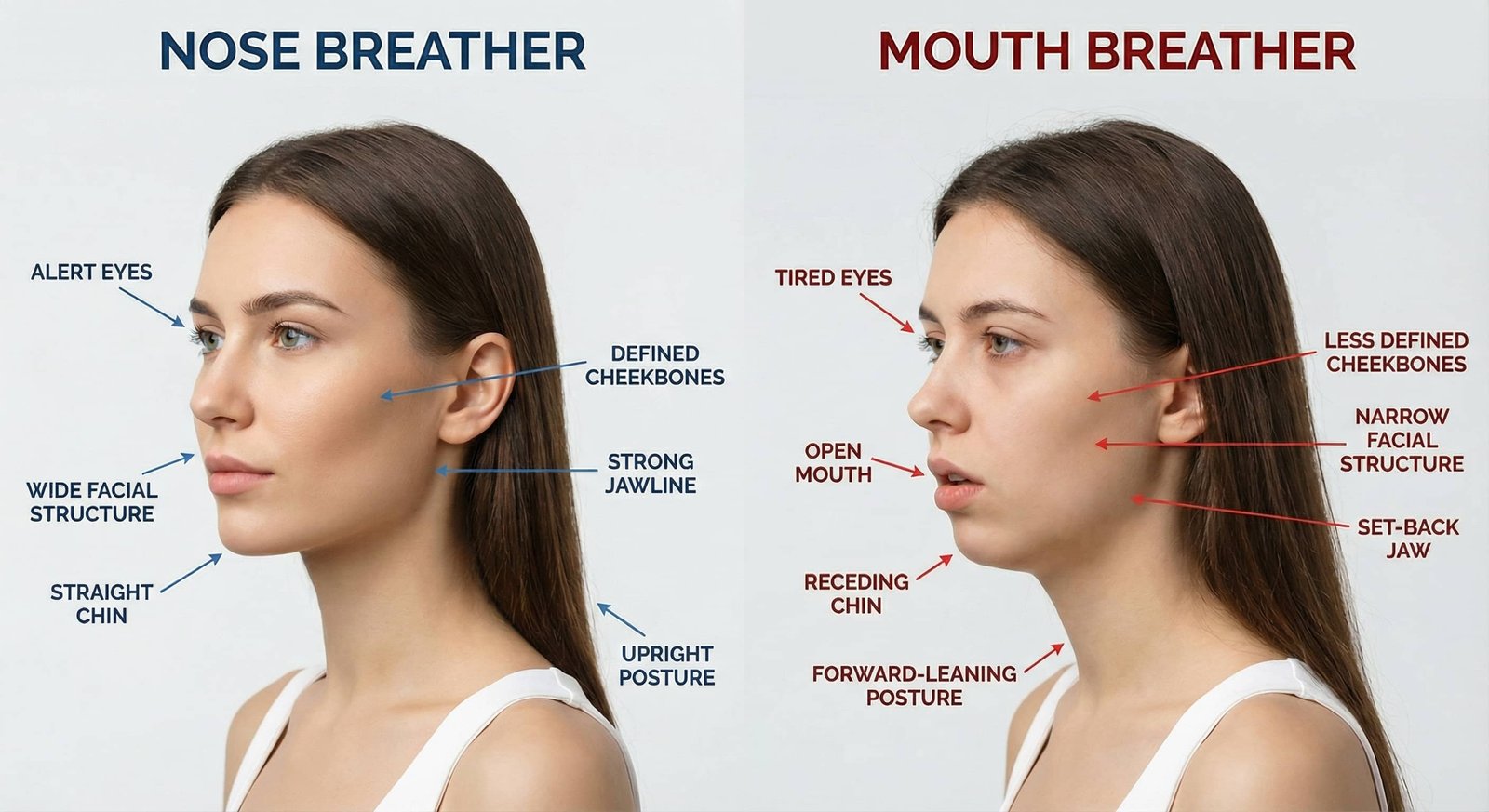
Research has associated chronic mouth breathing during developmental years with features such as:
✓ Narrower Dental Arches
Leading to crowded teeth and orthodontic issues.
✓ Longer Facial Appearance
Sometimes called "long face syndrome" in orthodontic literature.
✓ Recessed Chin Appearance
The lower jaw may appear less prominent.
✓ Dark Circles or Tired Appearance
Often related to poor-quality sleep and airway issues.
✓ Lip Incompetence
Difficulty keeping lips comfortably closed at rest.
✓ Less Defined Jawline
Changes in muscle activity and growth patterns may contribute.
Mouth Breathing Doesn't Only Affect Appearance
Many patients are surprised to learn it can also contribute to:
😴 Poor Sleep Quality
😷 Dry Mouth
🦷 Higher Cavity Risk
🩸 Increased Gum Problems
😮 Bad Breath
⚡ Tooth Sensitivity
Because saliva protection decreases when the mouth stays open.
Signs You Might Be a Mouth Breather
You may notice:
Waking up with a dry mouth
Frequent bad breath
Snoring
Sleeping with your mouth open
Chronic nasal congestion
Cracked lips
Fatigue despite adequate sleep
Many people discover these patterns only after being asked about them.
Can Mouth Breathing Be Corrected?
The answer depends on the cause.
Treatment may involve:
Addressing allergies or nasal obstruction
ENT evaluation
Orthodontic treatment when needed
Airway assessment
Habit correction strategies
Early intervention is especially important for growing children.
What Parents Should Know
One of the most important messages in modern dentistry and orthodontics is this:
Breathing habits can influence facial development.
If a child:
Snores frequently
Sleeps with an open mouth
Has chronic nasal blockage
Appears tired despite sleeping
It may be worth discussing these concerns with healthcare professionals.
A Fact Most People Never Hear
Many people focus on teeth when thinking about orthodontics.
But increasingly, dentists and orthodontists are also evaluating:
Airway health
Tongue posture
Breathing patterns
Sleep quality
Because facial development is influenced by more than genetics alone.
Final Takeaway
Breathing is something we do thousands of times a day without thinking.
Yet the way we breathe can influence oral health, sleep quality, facial growth, and smile aesthetics.
While mouth breathing doesn't determine facial appearance on its own, it may be one of the most overlooked factors affecting both dental and facial development.
Airway-Aware Dental Care at Dental Care Solutions, Pune
At Dental Care Solutions, Perihar Chowk, we believe oral health is connected to breathing, sleep, facial development, and overall wellbeing. Early identification of airway and oral health concerns can make a significant difference—especially for growing children.